STATUS / IN DEVELOPMENT
CAPABILITIES // R/V MOULIN À VENT
BUILT TO GO.
EQUIPPED TO DO.
Moulin à Vent is being reawakened as a multidisciplinary research and expedition platform designed to support science, conservation, education, exploration, documentation and field operations in remote marine environments.
The vessel to enable your mission.
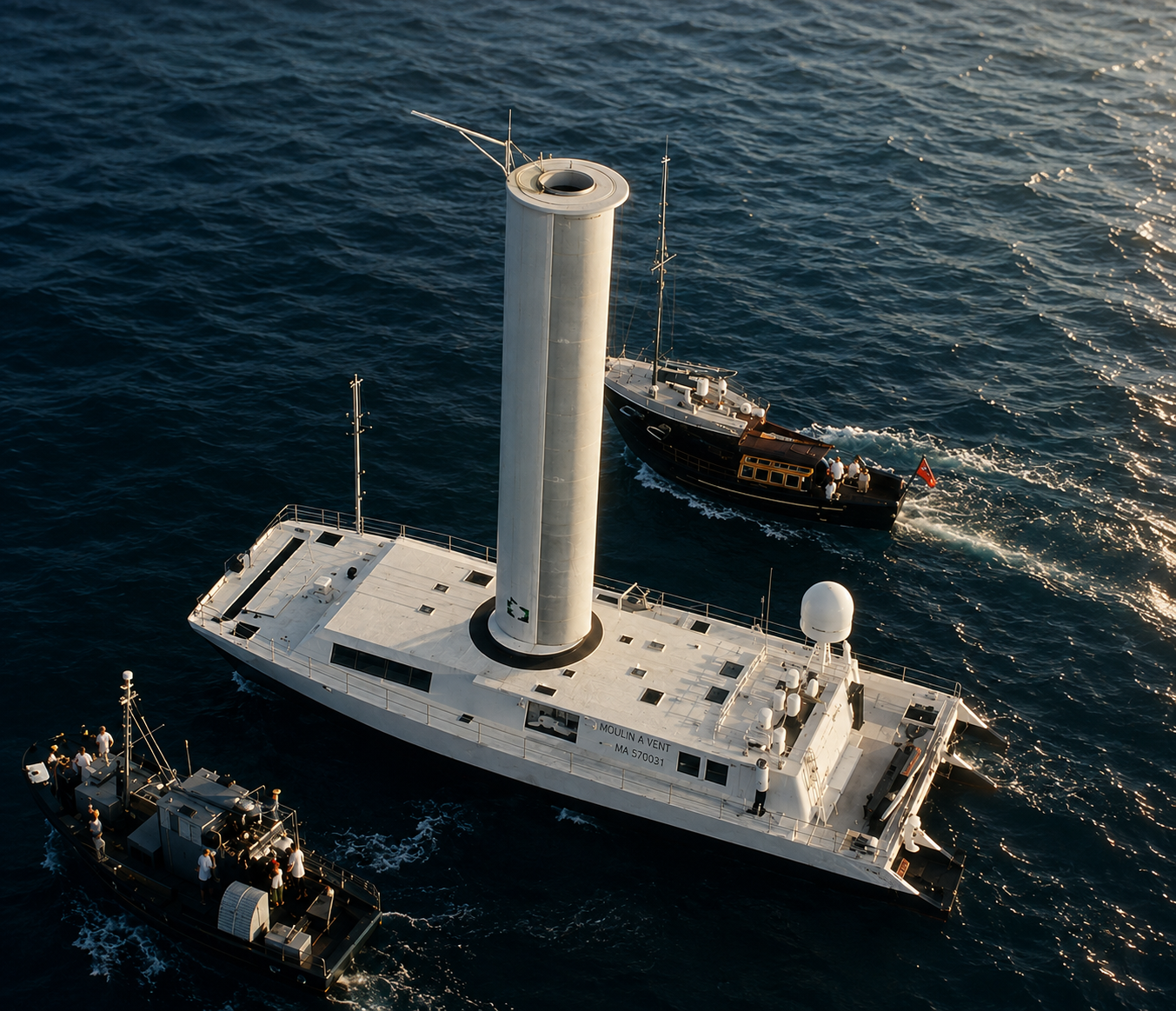
THE FUTURE R/V MOULIN À VENTRESEARCH + CONSERVATION + DOCUMENTATIONOPERATIONAL CAPABILITIES IN DEVELOPMENT
01 / VESSEL OVERVIEWCURRENT FRAME // FUTURE ROLE
THE FUTURE R/V MOULIN À VENT
THE PLATFORM
BEHIND THE WORK.
Moulin à Vent is being developed as a research and expedition catamaran supporting field science, conservation, practical experimentation and documentary work. Verified dimensions describe the existing vessel; proposed systems describe the current design direction.

VERIFIED DIMENSIONS DEFINE THE EXISTING FRAME. DISPLACEMENT IS AN ESTIMATE; EQUIPMENT, CAPACITY AND SYSTEM PERFORMANCE REMAIN SUBJECT TO ENGINEERING.
02 / DEVELOPING CAPABILITY REGISTER
WHAT THE
VESSEL ENABLES.
Fourteen mission areas describe the vessel’s intended future capability envelope. Every module can be updated as engineering, equipment selection and operating arrangements are finalized.
SELECT A CAPABILITY TO EXPLORE01 //MARINE RESEARCH
A flexible proposed field platform for multidisciplinary research, in-water observation and coastal or offshore scientific work.
- MARINE BIOLOGY
- OCEANOGRAPHIC FIELDWORK
- COASTAL RESEARCH
- HABITAT ASSESSMENT
- REEF SURVEYS
- ENVIRONMENTAL BASELINE STUDIES
02 //WET LAB + SAMPLING
A compact onboard wet laboratory is planned to support the collection, preparation, observation and responsible storage of field samples.
- MICROSCOPY
- WATER-QUALITY ANALYSIS
- SAMPLE PREPARATION
- REFRIGERATED STORAGE
- FREEZER STORAGE
- ENVIRONMENTAL SENSORS
- DATA LOGGING
03 //DIVING + UNDERWATER OPERATIONS
The developing vessel plan prioritizes practical water access and support for underwater observations, surveys and equipment deployment.
- SCUBA OPERATIONS
- UNDERWATER SURVEYS
- SCIENTIFIC DIVING SUPPORT
- UNDERWATER IMAGING
- REEF ASSESSMENT
- EQUIPMENT DEPLOYMENT
04 //ROV + REMOTE SYSTEMS
Future mission configurations may accommodate underwater cameras, remotely operated tools, aerial documentation and other remote-sensing equipment.
- ROV OPERATIONS
- UNDERWATER CAMERAS
- SONAR
- REMOTE SENSORS
- DRONES / UAV
- AERIAL SURVEY
05 //ENVIRONMENTAL MONITORING
The intended research architecture can evolve around repeatable field observations, water-quality work and environmental monitoring partnerships.
- WATER-QUALITY STUDIES
- FIELD OBSERVATION
- COASTAL CONDITIONS
- ENVIRONMENTAL BASELINES
- SENSOR DEPLOYMENT
- RESEARCH DATA
06 //CONSERVATION + CLEANUP
MÀV is intended to function as both transportation and working infrastructure for conservation teams, marine-debris projects and remote coastal programs.
- MARINE DEBRIS SURVEYS
- PLASTIC RECOVERY
- COASTAL CLEANUPS
- REMOTE ISLAND CLEANUPS
- WASTE CHARACTERIZATION
- HABITAT RESTORATION SUPPORT
- COMMUNITY FIELD PROJECTS
07 //DOCUMENTARY + MEDIA
A proposed documentary field platform for recording the people, environments, research questions and work encountered during expeditions.
- DOCUMENTARY PRODUCTION
- UNDERWATER IMAGING
- DRONE OPERATIONS
- PHOTOGRAPHY
- INTERVIEWS
- FIELD JOURNALISM
- SCIENTIFIC DOCUMENTATION
08 //SMALL CRAFT + SHORE ACCESS
The current design direction considers small-craft operations and practical access to shorelines, remote islands and nearshore work areas.
- SMALL-CRAFT SUPPORT
- SHORE TRANSFERS
- REMOTE LANDINGS
- KAYAK OPERATIONS
- EQUIPMENT MOVEMENT
- NEARSHORE ACCESS
09 //FIELD FABRICATION + REPAIR
A compact planned workshop would support maintenance, electrical work, equipment adaptation and practical repairs beyond conventional infrastructure.
- MECHANICAL REPAIR
- ELECTRICAL WORK
- FABRICATION
- FIELD PROTOTYPING
- EQUIPMENT MODIFICATION
- EXPEDITION EQUIPMENT REPAIR
10 //RECYCLED MATERIAL PROCESSING
Small-scale onboard plastic processing is proposed to turn recovered material into durable, useful components, repair materials and educational demonstrations.
- PLASTIC SHREDDER
- SHEET PRESS
- DESKTOP EXTRUSION
- SMALL-SCALE INJECTION MOLDING
- FIELD REPAIR
- MATERIAL RESEARCH
- DURABLE USEFUL OBJECTS
11 //COMMUNICATIONS + DATA
Future navigation, communications and data-management systems are intended to connect vessel operations with research and documentation teams.
- SATELLITE CONNECTIVITY
- NAVIGATION
- AIS
- RADAR
- SONAR
- DATA MANAGEMENT
- RESEARCH COMMUNICATIONS
- REMOTE COLLABORATION
12 //ACCOMMODATIONS + ENDURANCE
The developing accommodation plan anticipates space for approximately 12+ crew, researchers, conservation personnel, filmmakers and expedition participants.
- 12+ PLANNED BERTH CAPACITY
- SCIENTISTS + RESEARCHERS
- CONSERVATION TEAMS
- DOCUMENTARY TEAMS
- EDUCATORS
- EXTENDED FIELD OPERATIONS
13 //EXPERIMENTAL TECHNOLOGY
The next chapter continues the vessel’s experimental history through proposed wind-assist research, electrification, renewable energy and lower-impact materials.
- ELECTRIC PROPULSION
- RENEWABLE ENERGY
- ENERGY STORAGE
- NEXT-GENERATION TURBOSAIL
- ACTIVE AERODYNAMICS
- RECYCLED MATERIALS
- FIELD TECHNOLOGY TESTING
14 //EXPEDITION SUPPORT
MÀV is being developed as shared working infrastructure for organizations whose projects require access, logistics and sustained field presence.
- RESEARCH PARTNERSHIPS
- CONSERVATION PROGRAMS
- EDUCATIONAL EXPEDITIONS
- FIELD LOGISTICS
- DOCUMENTARY MISSIONS
- COMMUNITY PROGRAMS
CAPABILITIES SHOWN REPRESENT PROPOSED OR DEVELOPING MISSION APPLICATIONS. FINAL EQUIPMENT, CERTIFICATIONS, OPERATING CONDITIONS AND AVAILABILITY HAVE NOT BEEN ESTABLISHED.
03 / WORKING PRINCIPLE
THE WATER
IS THE
WORKSPACE.
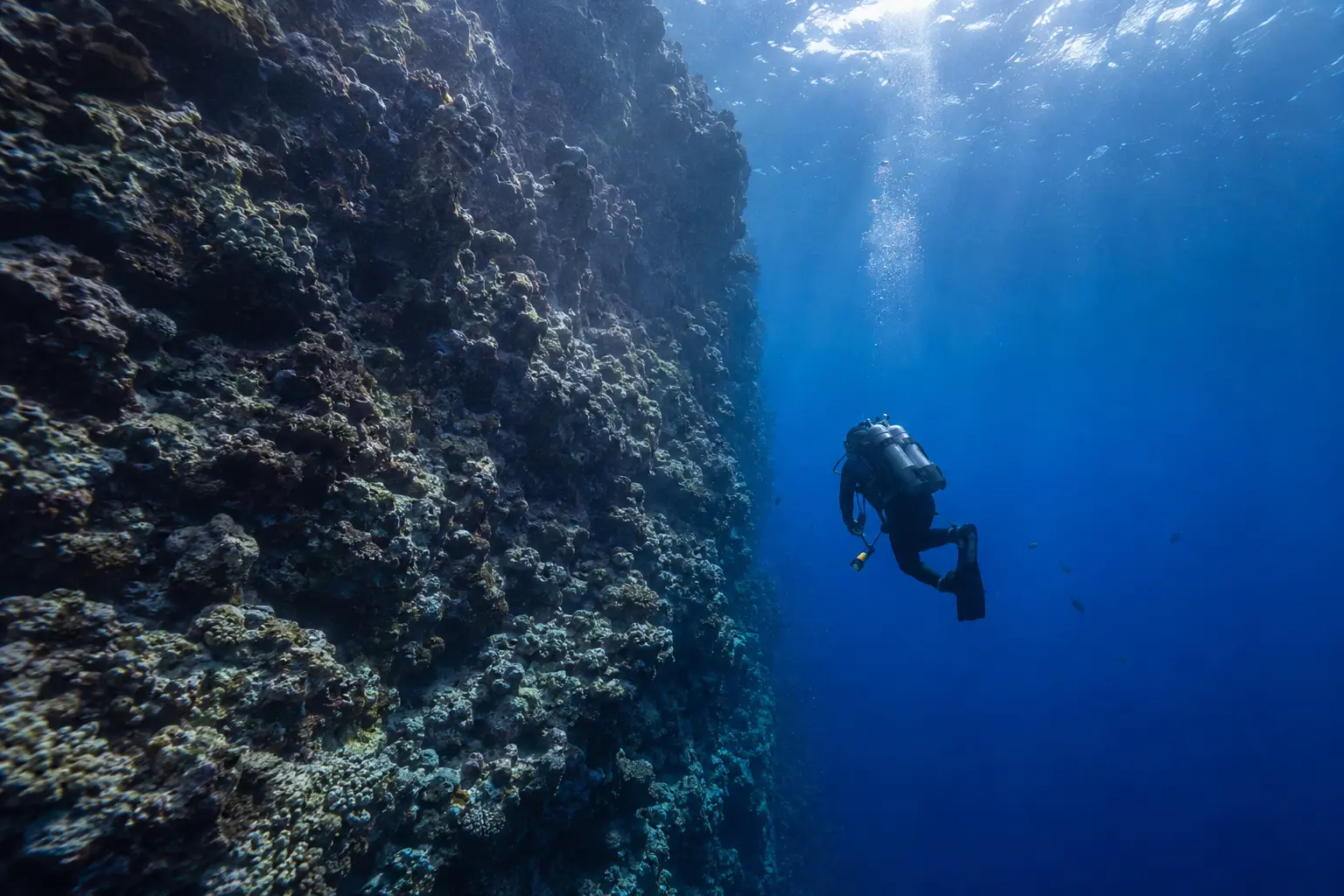
MÀV is not simply a way to reach a place. The current design direction treats the vessel as working infrastructure for what happens after arrival: observing, sampling, repairing, recovering, documenting and asking better questions.
FIELD ACCESS / WORKING DECK / EXPEDITION SYSTEMS04 / MISSIONS // POSSIBILITIES
BRING A MISSION.
WE’LL BUILD THE PLATFORM.
The intended future operating envelope is deliberately flexible. Specific mission readiness will depend on final engineering, equipment, certifications and operating arrangements.
01MARINE RESEARCH02REEF SURVEYS03CORAL PLANTING04ARTIFICIAL REEF INSTALLATIONS05WATER-QUALITY STUDIES06PLASTIC-POLLUTION RESEARCH07REMOTE CLEANUPS08CONSERVATION PROJECTS09DOCUMENTARY PRODUCTIONS10TECHNOLOGY TRIALS11SCIENTIFIC DIVING SUPPORT12COMMUNITY FIELD PROGRAMS13EDUCATIONAL EXPEDITIONS14ENVIRONMENTAL BASELINE STUDIES15REMOTE ISLAND OPERATIONS
THE DETAILS WILL FOLLOW
THE ENGINEERING.
A downloadable vessel capabilities document will be published when the general arrangement, systems, equipment and operating information have been verified.
06 / PROJECTS + COLLABORATION
BRING US
A QUESTION.
MÀV is being developed to support research institutions, conservation organizations, filmmakers, educators, technology partners and expedition teams whose work requires access to the marine environment.
Future availability may include collaborative projects, nonprofit programming, research support, documentary missions and limited private expeditions.