01 / THE LISTING
A RECOGNIZABLE SHAPE
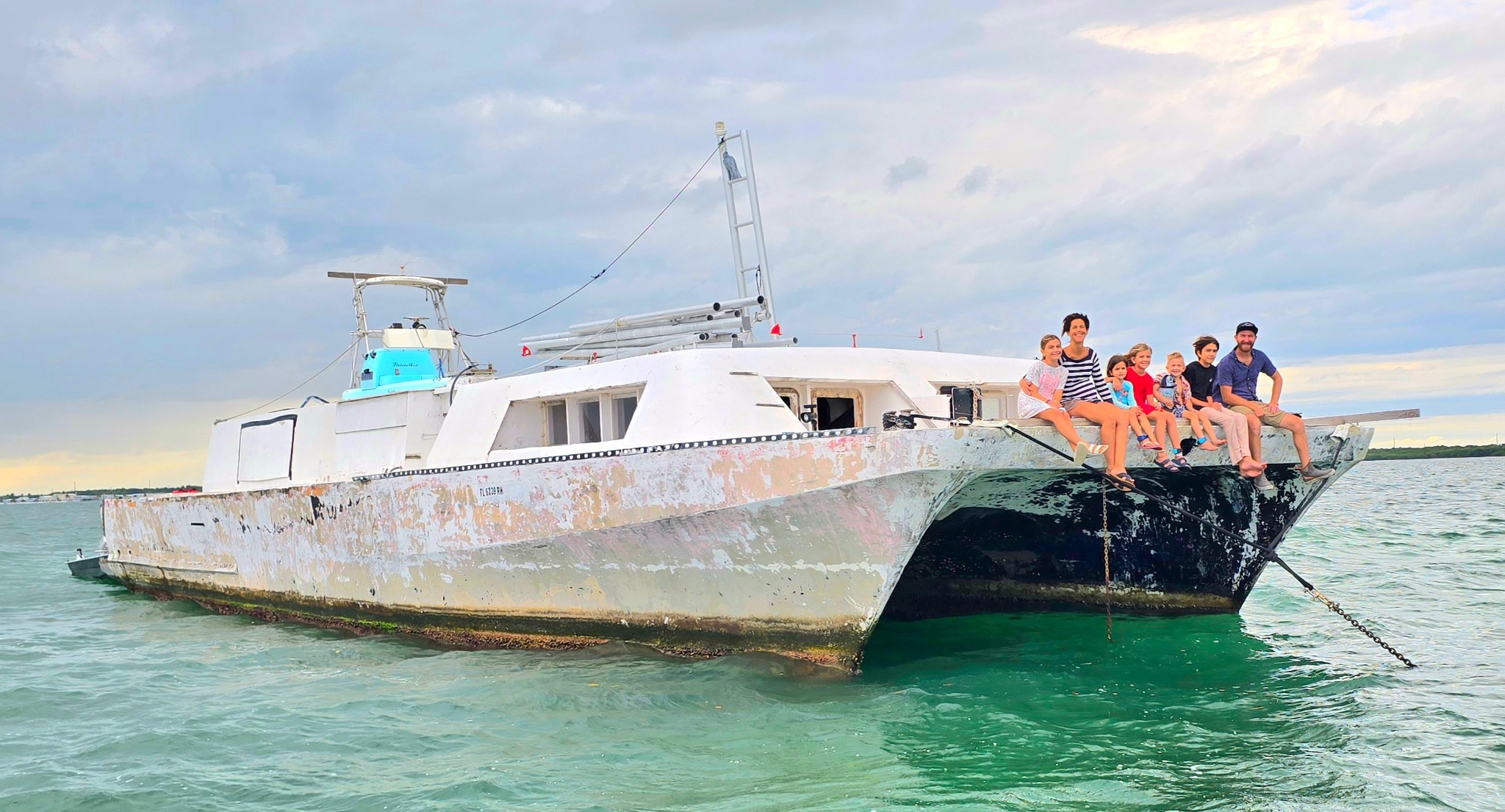
The modern investigation began when an online vessel listing brought an unusual catamaran to the project's attention. Historical Cousteau-related material associated with the listing made the claim worth examining, but the listing itself did not authenticate the vessel.
Its distinctive hull form, unusual proportions and major dimensions warranted comparison with period photographs, film footage, technical records and the surviving vessel. Identification was cumulative: no single caption, measurement or physical detail was treated as conclusive on its own.
IDENTIFICATION // PHYSICAL RECORD
HULL FORM // Surviving catamaran geometry compared with historical photographs and drawings.DIMENSIONS // Major measurements compared with historical and technical records.SURVIVING FEATURES // Construction details and openings examined against archival imagery and documentation.IDENTIFICATION // ARCHIVAL COMPARISON
PHOTOGRAPHY + FILM // Period views used to compare profile, arrangement and recognizable features.TECHNICAL RECORDS // Papers and vessel records used to establish context and expected characteristics.DOCUMENTATION // Available modern vessel records considered as part of the wider evidence, not as a complete ownership history.02 / THE SURVIVOR
ALTERED, BUT STILL THERE
Modern vessel inspection shows a catamaran substantially changed from its experimental-era appearance. The original Turbosail installation was no longer present; finishes, interior and deck arrangements, and later equipment had changed, while age and long storage had left extensive deterioration.
The surviving record does not yet establish which owner made every alteration or when each change occurred. What remained was the underlying historic object: an altered vessel rather than a replica or reconstruction. Preservation therefore cannot mean returning every component to an imagined single moment in 1983. The vessel changed. The historic platform survived.
03 / THE ARCHIVE
REBUILDING THE RECORD
Preserving Moulin à Vent involves two parallel projects: the physical vessel and the historical record. The archive is assembling and reconciling contemporary reporting, technical papers, historical photographs, film footage, vessel records, later retrospectives, first-hand recollections and observations made during the modern investigation.
These sources do not always carry the same evidentiary weight. Dates, ownership chronology and attribution remain qualified when the supporting record is incomplete, and later recollection is distinguished from contemporary documentation and modern first-hand observation.
This work is as important as the physical reconstruction. A surviving vessel without a careful record can easily become a simplified legend.
04 / THE REAWAKENING
A NEW EXPERIMENT
MÀV is planned for comprehensive reconstruction in Vietnam. Moulin à Vent began as an experimental platform; the reconstruction intends to preserve that spirit of inquiry rather than simply recreate the vessel as a static museum object.
The current direction considers lower-impact propulsion, renewable energy, research capability, conservation work, education and documentary exploration. These systems remain planned, proposed or under development and are subject to engineering; they are not final vessel specifications.
EXPLORE THE VESSEL CAPABILITIES →